

Accelerating industrial decarbonization with Lyon’s solutions
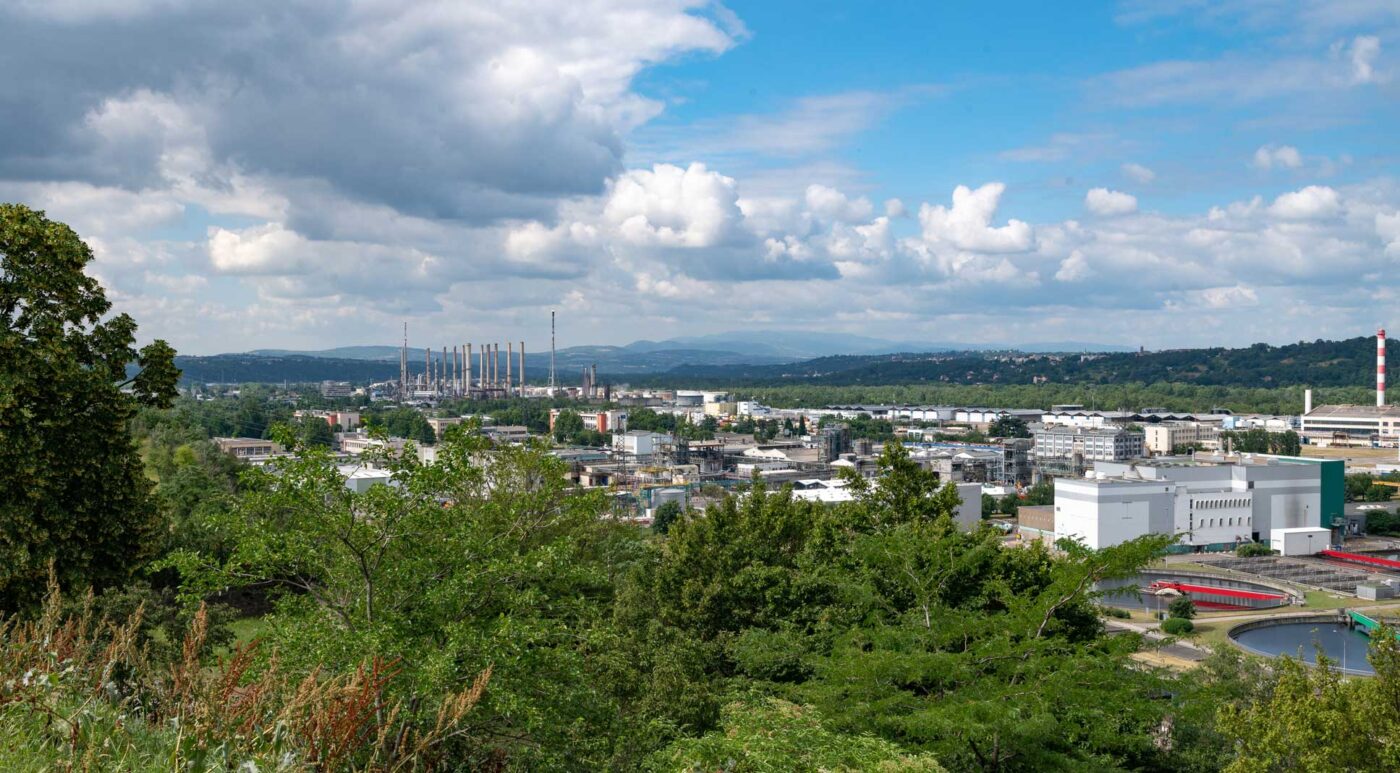
Lyon’s Chemical Valley
Lyon: a leading hub for industrial decarbonization
Industrial decarbonization is not just an ambition in the Lyon region, it is already a reality in motion. As France’s leading industrial metropolitan area, with 84,000 industrial jobs, 6,940 industrial establishments, and more than 800 new industrial businesses created each year, Lyon combines manufacturing strength, innovation capacity, and a strong commitment to the low-carbon transition.
The region also benefits from being part of Auvergne-Rhône-Alpes, France’s leading region for net factory openings and the European Union’s most attractive industrial region for manufacturing investment projects. This deep industrial foundation creates an ideal environment for accelerating industrial decarbonization.
Local stakeholders committed to reducing emissions
The Lyon region brings together a unique ecosystem of industrial, scientific, and institutional stakeholders committed to advancing industrial transformation.
Within the Vallée de la Chimie (Lyon’s Chemical Valley), nearly 430 companies are helping reshape one of France’s largest industrial hubs. This momentum is reflected in the Impact Pact 2023–2030, which brings together 42 companies around shared objectives: reducing the environmental footprint of industrial activities, strengthening their positive impact on the local area, and improving the integration of industry into the urban environment.
Building on this historic industrial base, major low-carbon transition stakeholders, including Axelera, Axel’One, IFPEN, Compagnie Nationale du Rhône (CNR), Symbio, Kem One, Syensqo, TotalEnergies, Air Liquide, and Vicat, are developing new solutions in recycling, hydrogen, sustainable materials, energy efficiency, waste recovery, and low-carbon energy.
Industry, energy, innovation, and circular economy: Lyon’s Impact Factory model
The Lyon region’s strength lies in its ability to bring together industry, energy, research, and innovation.
This model, which ONLYLYON Invest refers to as the “Impact Factory”, is built on a simple principle: combining value creation, industrial competitiveness, decarbonization, and positive impacts for the region.
This approach is reflected in numerous collaborative initiatives. The DECLYC program (Decarbonizing Lyon Chemical Valley), jointly led by Axelera and the Lyon Metropolitan Area as part of France’s national Low-Carbon Industrial Zone initiative, brings together fourteen industrial companies and research organizations to identify synergies around steam, water, energy, and circular economy solutions.
Its ambition is clear: reduce CO₂ emissions in the Vallée de la Chimie by 40% by 2030 and by 80% by 2050.
This spirit of collaboration can also be found in innovation platforms such as Axel’One, which provides access to tens of millions of euros worth of shared R&D equipment, and at sites such as USIN Lyon Parilly, where startups, manufacturers, and researchers experiment together with more resource-efficient and circular industrial models.
Low-carbon projects transforming industrial value chains
Industrial decarbonization is already taking shape through concrete projects across the Lyon region.
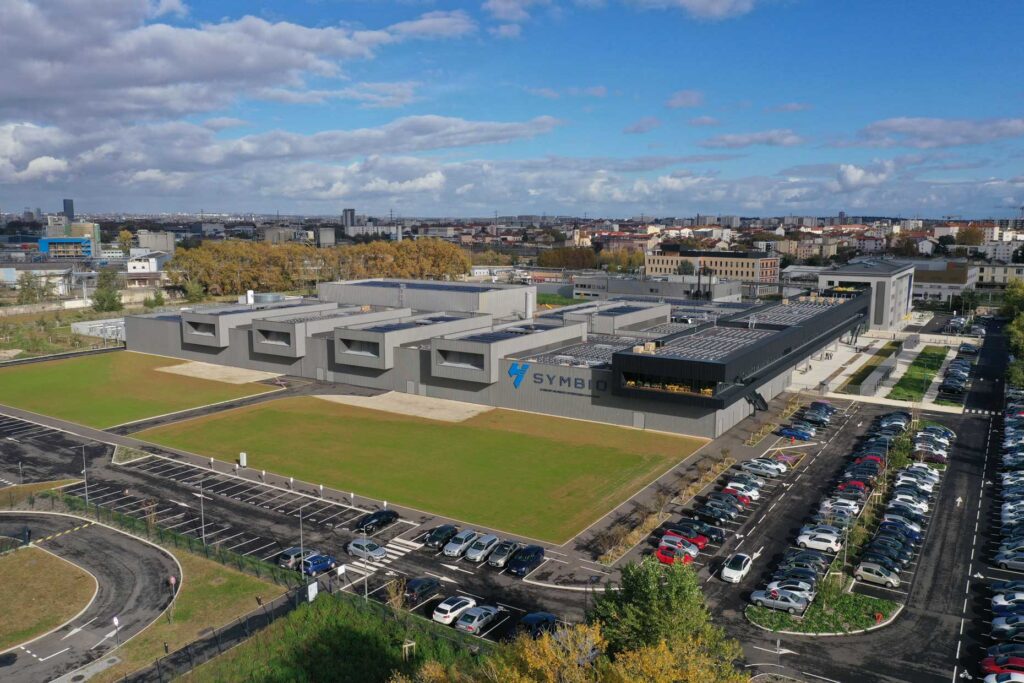
In hydrogen, Symbio inaugurated its SymphonHy facility in Saint-Fons in 2023, presented as Europe’s largest hydrogen fuel cell production site, with a target production capacity of 50,000 systems per year. At the same time, the HY-FEN project led by Natran aims to connect manufacturers in the Vallée de la Chimie to the future European hydrogen corridor.
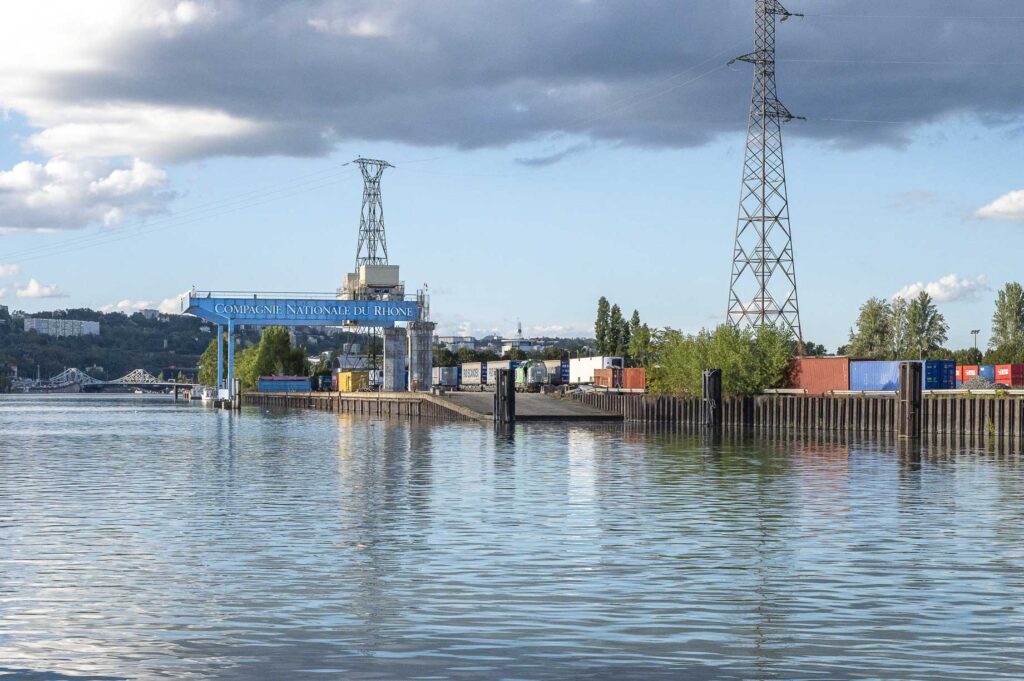
In logistics and transportation, the Mediterranean Rhône-Saône Corridor (MeRS) promotes a modal shift toward river and rail transport to reduce the carbon footprint of industrial freight. The Port Édouard Herriot continues its transformation into a low-carbon multimodal platform, while Kem One expects to avoid approximately 2,000 tons of CO₂ emissions annually through the deployment of new hybrid river barges.
In the circular economy, companies such as Bobine, Recyc’Elit, Mecaware, and Deltalys are developing solutions for chemical recycling, waste recovery, and the recycling of strategic materials. The future Circulyz eco-park, located in Feyzin at the heart of the Vallée de la Chimie, is specifically designed to host a new generation of industrial businesses focused on circularity and resource regeneration.
Finally, the Lyon region benefits from a major structural advantage: access to largely decarbonized electricity, supported by Rhône River hydropower, investments in smart grids, battery technologies, solar energy, industrial electrification, and next-generation nuclear technologies.
Together, these initiatives position the Lyon region among Europe’s most advanced territories for accelerating industrial decarbonization while preserving industrial competitiveness and innovation capacity.
Understanding the key drivers of industrial decarbonization
Reducing energy consumption at production sites
Energy efficiency is often the first step toward industrial decarbonization. Even before transforming manufacturing processes or switching energy sources, companies can significantly reduce emissions by optimizing existing equipment, recovering waste heat, improving energy management systems, and gradually electrifying industrial operations.
The benefits are substantial: lower energy costs, reduced CO₂ emissions, improved competitiveness, and less exposure to energy price volatility. In an environment of increasing regulatory requirements and sustainability reporting obligations, these actions often represent the first stage of an industrial decarbonization roadmap.
The Lyon region also offers a rare structural advantage at the European level: access to reliable and readily available low-carbon electricity. In France, more than 95% of electricity is generated from low-carbon sources, primarily nuclear and hydropower, compared with approximately 73% on average across the European Union.
For manufacturers, this translates into lower electricity-related emissions while ensuring operational reliability and long-term competitiveness.
Beyond this, the Lyon region benefits from a highly favorable energy environment supported by Rhône hydropower, smart grid development, energy storage solutions, industrial electrification, and emerging energy technologies. This ecosystem helps facilitate new industrial investments and accelerates the transition to low-carbon manufacturing.
Transforming processes, raw materials, and logistics flows
Reducing industrial carbon emissions also requires the transformation of manufacturing processes.
Companies can act on multiple fronts, including replacing carbon-intensive raw materials, integrating recycled materials, minimizing waste, optimizing logistics flows, sharing resources, and developing circular economy loops.
This comprehensive approach embeds decarbonization into industrial strategy rather than treating it solely as a compliance requirement.
Leveraging innovation to accelerate the transition
Innovation is one of the most powerful accelerators of the low-carbon transition.
In the Lyon region, companies, laboratories, and technical centers develop advanced solutions in hydrogen technologies, next-generation industrial processes, energy storage, artificial intelligence applied to industry, electrification, and environmental technologies.
This environment enables manufacturers to test, deploy, and scale innovations more rapidly while benefiting from privileged access to scientific and technical partners.
Accelerate your decarbonization project with ONLYLYON Invest
Identify the right industrial, energy, and technology partners
ONLYLYON Invest supports companies looking to expand, transform, or establish industrial operations in the Lyon region.
Our teams help identify the industrial, energy, academic, and technology partners needed to successfully deliver decarbonization projects.
Find the right environment for low-carbon industrial projects
The Lyon region offers access to largely decarbonized energy, world-class infrastructure, a dense industrial base, and a wide range of innovation and industrial transition support programs.
Companies also benefit from close proximity to major industrial, research, and energy stakeholders, helping accelerate the development of ambitious projects.
Connect with the region’s industrial transition ecosystem
ONLYLYON Invest connects companies with the region’s entire ecosystem, including public authorities, competitiveness clusters, business clusters, technical centers, manufacturers, investors, and innovation networks.
These connections accelerate opportunity identification, partnership development, and the long-term success of low-carbon industrial projects.
FAQ
The priorities depend on the site’s specific profile, but the first steps often involve reducing energy consumption, improving equipment efficiency, recovering waste heat, upgrading industrial processes, switching to lower-carbon raw materials, and optimizing logistics flows. A comprehensive assessment can help prioritize actions based on their impact, cost, and feasibility.
Industrial decarbonization projects should be evaluated by comparing the required investments with the expected benefits, including lower energy costs, reduced CO₂ emissions, improved industrial performance, access to financing opportunities, regulatory compliance, and enhanced corporate reputation. In most cases, the return on investment is economic, environmental, and strategic.
ONLYLYON Invest helps companies identify the right industrial, energy, and technology partners, find tailored solutions, and connect with the region’s industrial transition ecosystem. Our team also supports companies throughout their expansion or location project and facilitates their integration into Lyon’s dynamic industrial environment.